
How a Single 90-Minute Session Got 400 Disengaged Attendees on Their Feet (And Gave Them Communication Skills They Used the Next Day)
If you've ever watched your conference audience check their phones during a keynote, you know the feeling. You paid good money. They're bored. And nothing changes after. There's a different way.
Last year I did 68 keynotes. Different industries. Different audience sizes. Same pattern: organizers tell me it was the highest-rated session. Attendees say they're still using what they learned months later.
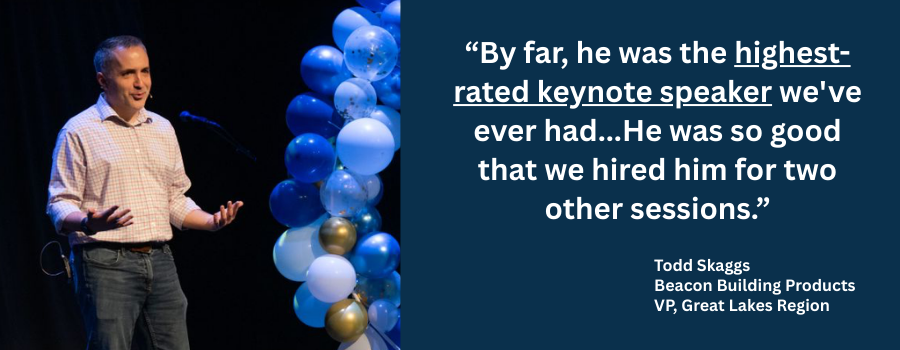
Here's What's Different
One session. Entire room participates. Skills they use the same day.
No one zones out. No awkward volunteer dragged on stage. No lecture while people scroll LinkedIn.
Just a room full of people—introverts included—learning by doing.
Austin, September 12th. 400 people. 3:00 PM slot.
The organizer found me backstage.
"Jon, I'm going to be honest. Three speakers today. People are fried. Half the room's on their phones. If you can just keep them awake, I'll call it a win."
She wasn't wrong. I could see them through the curtain.
Laptops open. Arms crossed. That look.
Most speakers would panic. I'd been doing improv for 25 years and knew what to do.
90 seconds in, the entire room was playing a game. Not watching. Playing.
No one on stage. No awkward volunteers. Just 400 people, in their seats, phones out, participating in a communication exercise.
Then we ramped up. A movement game in seats.. Partner exercises at tables. Then everyone stood up.
By the end, they weren't just awake. They had de-escalation techniques. Active listening frameworks. Stuff they could use in tomorrow's meeting.
The organizer came up after with wet eyes.
"Highest-rated session of the conference. People are already asking when you can come back."
That's when it clicked: Most keynotes fail because they treat people like an audience. When the whole room participates, everything changes.
I call it, whole-room improv.
Here's why it works when traditional keynotes don't.
Since 2019, I've done this 700+ times. Companies over $100M. Vistage executive groups. Healthcare systems. Tech startups. Almost every industry you can name.
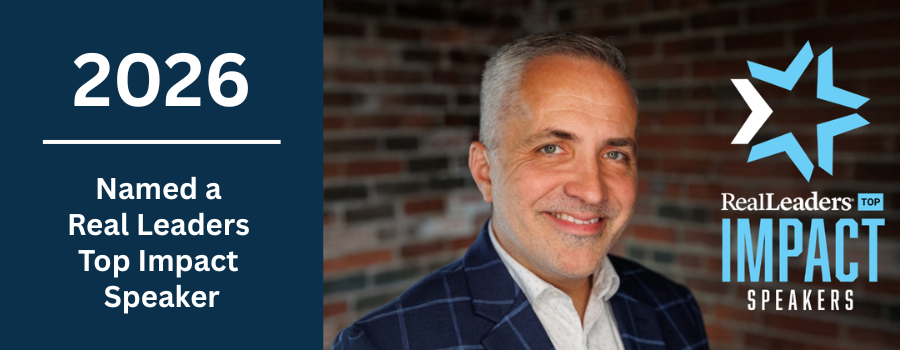
(they only recognize speakers with measurable organizational impact).
This isn't entertainment. Every exercise teaches something:
Communication: De-escalation, conflict resolution, breaking silos
Leadership: Decision-making under pressure, building confidence
Retention: Creating cultures where people want to stay
And here's the thing: You don't need to be an extrovert. The exercises start easy. Build confidence. Meet people where they are.
But This Doesn't Work For Everyone
It ONLY works if your attendees are leaders, managers, or people who need communication and team-building skills (not audiences wanting motivational fluff with no real takeaways).
It ONLY works if you're willing to have your audience participate (not events where people sit silently taking notes).
It ONLY works if you care about behavior change more than polished slides (not organizers who measure success by how "professional" someone looks on stage).
It ONLY works if you're open to something different (not conferences that need traditional one-way presentations).
It ONLY works if your organization is over $100M or values experiential learning (not small companies unfamiliar with interactive training).
If you want someone behind a podium reading slides, this isn't for you.
But if you're tired of attendees forgetting everything by the parking lot, keep reading.
Traditional Keynotes Have Three Problems
Problem #1: "People zone out after 10 minutes."
You plan for months. You book speakers. Halfway through the talk, everyone's checking email.
It's not their fault. Humans can't absorb passive information for an hour. Attention drops after 10 minutes of one-way talking.
The fix: Make them participants in the first 90 seconds. When everyone's involved, attention stays high.
Problem #2: "Nothing changes after the event."
Standing ovation. Great feedback forms. Then crickets.
They go back to their desks. Same communication patterns. Same conflicts. Same blind spots.
Inspiration fades. Skills stick.
The fix: They don't just hear about better communication. They practice it. Muscle memory beats motivation.
Problem #3: "Speakers are either entertaining or useful. Never both."
You've been burned. The entertaining one got laughs but taught nothing. The expert put everyone to sleep.
You need both.
The fix: Improv exercises teach real frameworks. Energy stays high. Learning sticks.
Here's how Whole-Room Improv works:
Step 1: Wade In The Shallow End
Most speakers jump straight to "turn to your neighbor and share your biggest fear."
That's social terrorism.
I start with shallow-end activities. Low-risk. Alone. In their seats. No talking required.
Here's what that looks like:
Phone-based activities: Use their phones for a quick communication game. No eye contact. No pressure.
Solo vocal exercises: Practice tone variation quietly at their own pace. Builds the foundation for active listening.
Individual observation tasks: Notice something about the room or their body language. Zero pressure.
Why this works:
Start small. Kill the fear response. They think, "Okay, I can do this."
Once they succeed at something easy, they'll try something harder.
What they learn:
How to stay present (critical for leaders)
"Yes, and" thinking and active observation
Confidence they can participate without embarrassing themselves
Real-world use:
They read the room in meetings. Notice team dynamics. Stay engaged during hard conversations.
Step 2: Build Trust at the Table
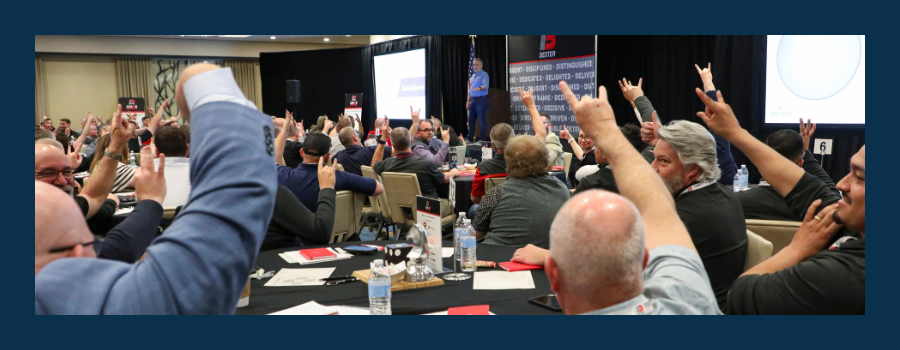
Once they feel safe, we level up.
Now they talk. Not to strangers. Just the people at their table.
This is where it gets good.
Partner listening exercises: Pair up. One speaks. One listens without interrupting. Then reflect back what they heard. Simple. Works.
"Yes, and" games: The cornerstone of improv. Build on each other's ideas instead of shutting them down. They see how it changes the conversation instantly.
De-escalation scenarios: I teach a framework. They practice with tablemates. Learn by doing.
Why this works:
They're with people they're already sitting with. No forced vulnerability with strangers. Just practice.
Because they're doing it—not hearing about it—it sticks.
What they learn:
Active listening for their next 1-on-1
"Yes, and" for problem-solving
De-escalation for conflict
How to give full attention without interrupting
Real-world use:
They use it in team meetings. Performance conversations. Cross-departmental work. Fewer miscommunications. Faster conflict resolution.
Step 3: Get the Whole Room Moving
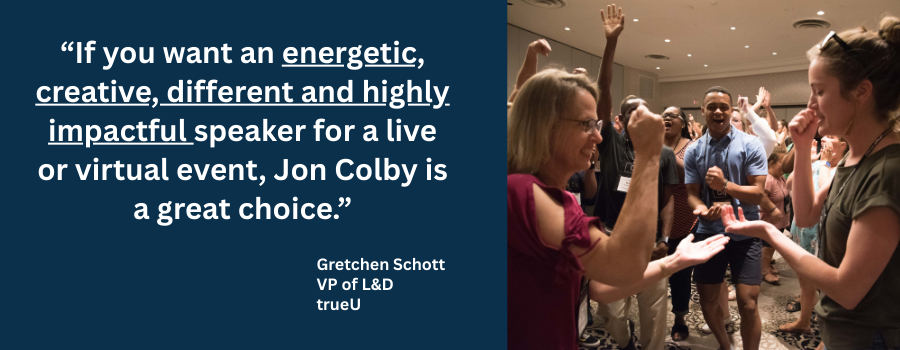
Now we go all in.
Entire room stands up. Moves. Full-group improv.
It's not chaotic. It's structured. Teaches specific skills.
Full-room games: Synchronized activities. Non-verbal communication. Group coordination. Same skills leaders need for complex team dynamics.
Decision-making drills: Low-stakes scenarios. Quick decisions. Commit. Act decisively without perfect information.
Creativity under pressure: Generate ideas fast without self-editing. Unlocks innovation.
Why this works:
Whole room moving together. Energy lifts. Barriers drop. Strangers feel like a team.
They're practicing real-time decision-making. Adaptability. Leadership muscles.
What they learn:
Make decisions quickly without overthinking
Non-verbal communication for executive presence
Foster psychological safety
Think on their feet in high-pressure moments
Real-world use:
Lead through uncertainty. Navigate tough stakeholder meetings. Create teams where people feel safe to contribute.
The Result: Skills They Use the Same Day
By the end, they have tools they can use immediately.
Active listening for tomorrow's meeting
De-escalation for the simmering conflict with a colleague
Decision-making for the strategy call
Presence for next week's client presentation
Because they learned by doing—not listening—it sticks.
Traditional speakers tell people what to do.
I let them practice.
Three Reasons This Works:
1. Built for how adults actually learn
People retain 10% of what they hear. 75% of what they practice.
This isn't a lecture with games sprinkled in. Every minute is active.
2. Meets people where they are.
Biggest fear: "What if my audience is introverted?"
That's why we start shallow. Zero-pressure activities. Build confidence step by step.
I've never had a group refuse to participate. By the time we're doing full-room exercises, they're already in.
3. You're not just hiring a speaker.
I offer a complimentary virtual workshop with your other presenters before the event. Make their content more engaging too.
And I guarantee results. Session doesn't land? Money back.
Does this work across industries?
Here's what clients say:
“Jon spoke at KLH's annual meeting (with all employees) and did an outstanding job of using laughter, improv, and real examples to remind our team what it means to truly listen, collaborate, and communicate with intentionality. It was educational and fun!”
Jim Tavernelli
President & CEO, Kohrs Lonnemann Heil Engineers, INC
“Jon's humor, energy, and expertise added up to a fabulously fun and inspiring workshop with my management team. 'Yes, and' have now become part of our company's vernacular...and we're all the better for it. Thanks, Jon!”
Gary Rivera
CEO, Creative Design Group, Inc.
“Jon’s work with our business has been instrumental in helping us navigate some tough times recently. Our entire company has learned so much from him and we’ve benefitted greatly from that learning. His work has helped our team think more creatively, and approach the day to day operations of our business with a much more innovative mindset. “Yes, and” is an incredibly powerful way to approach our work and has led to our team creating new lines of business, which has directly and positively impacted our revenue. We couldn’t be more grateful to Jon for the way he has shifted our business.”
Yonason Goldson
The Ethics Ninja
Nationally Syndicated Columnist
”For our premier event we were looking for someone to bring incredible energy to a program that mirrors our relentless culture. Not only did Jon put in the effort to understand and work into the program our new mission and brand identity, more importantly he was able to captivate every single person to participate, and did so by creating a fun and collaborative environment. A truly first-rate experience.”
Nick Bailey
President & CEO
Century 21
”Jon Colby has presented to two different audiences for my company and both times he received RAVE reviews. The presentations were grounded in sound business principles and strategies while maintaining an energy-infused, awesome level of engagement and interactivity...We wouldn’t hesitate to book him again.”
Angela Raab
Senior Director of Training Delivery
Realogy Holdings Corporation
Best part?
You don't gamble on whether they'll engage.
We confirm your goals. I customize the session to your challenges—communication breakdowns, leadership gaps, silos. Content lands.
68 events last year. Healthcare, tech, finance, manufacturing. Principles are universal. Application is tailored.
Consistent. Engaging. Measurable.
If you hire me, here's what happens:
✅ Entire room participates—no volunteers on stage, no passive watching
✅ Practical frameworks they use the same day—not fluff
✅ Shallow-end-first progression—meets people where they are
✅ Skills that stick: Active listening, "yes, and," de-escalation, decision-making, executive presence
✅ Higher engagement scores—no one checks their phone
✅ Money-back guarantee—session doesn't land? Full refund.
✅ Bonus: Complimentary workshop with your other presenters to make your whole event better
Two Options:
Option 1: Book a traditional speaker
Polished slide deck. Inspiring stories. Maybe a book.
Audience claps politely. Some take notes. Most forget by tomorrow.
Post-event surveys: "Nice session, but I wish it was more interactive."
Some organizers are fine with that. You're probably not.
Option 2: Whole-Room Improv
400+ sessions delivered. 2026 Real Leaders Top Impact Speaker. Methodology that works.
We'll:
✅ Customize to your challenges—communication, leadership, silos
✅ Get everyone participating—entire audience, not volunteers
✅ Give them skills they use immediately—same day, next meeting
✅ Workshop your other presenters—entire conference benefits
✅ Guarantee it works—or money back
The Investment
This isn't "show up and speak."
You're partnering with someone invested in your event's success.
What's included:
🎯 Pre-Event Consultation: Your challenges. Event goals. What success looks like. I tailor the session.
🎯 Customized 60-90 Minute Keynote: Built for your audience. Not cookie-cutter.
🎯 Virtual Workshop for Your Presenters: Make their content more engaging.
🎯 Post-Event Follow-Up: Attendees get a summary to keep practicing.
🎯 100% Money-Back Guarantee: Doesn't resonate? Full refund.
Who invests in this:
Organizations over $100M. Conferences wanting high-impact speakers.
ROI comes from:
Less conflict (saves leadership time, reduces turnover)
Better collaboration (faster decisions, more innovation)
Higher satisfaction scores (protects your reputation, increases future attendance)
Ready?
Here's what happens next:
Schedule a discovery call. We'll discuss:
✅ Your goals and challenges—Communication, leadership, team dynamics
✅ How we'll customize—Which frameworks deliver the most value
✅ Partnership structure—Consultation, workshop, follow-up
✅ Investment and logistics—Dates, travel, how we measure success
No pressure. Just seeing if we're a fit. I only take events where I'm confident I'll deliver.
P.S. — Your next event is coming
Book another "safe" speaker? You know what happens.
Polite sitting. Some notes. Lots of phone checking.
Surveys: "Wished it was more engaging."
OR bring in Whole-Room Improv.
They participate. Laugh. Learn. Use skills the same day.
The difference between forgettable and transformational is one session.
Make yours the one they talk about months later.
Jon Colby
2026 Real Leaders Top Impact Speaker
Creator of the Whole-Room Improv Method
Results vary based on audience size, event format, and organizational commitment to implementing learned skills. While Jon guarantees audience engagement and satisfaction, individual and organizational outcomes depend on post-event application and practice.